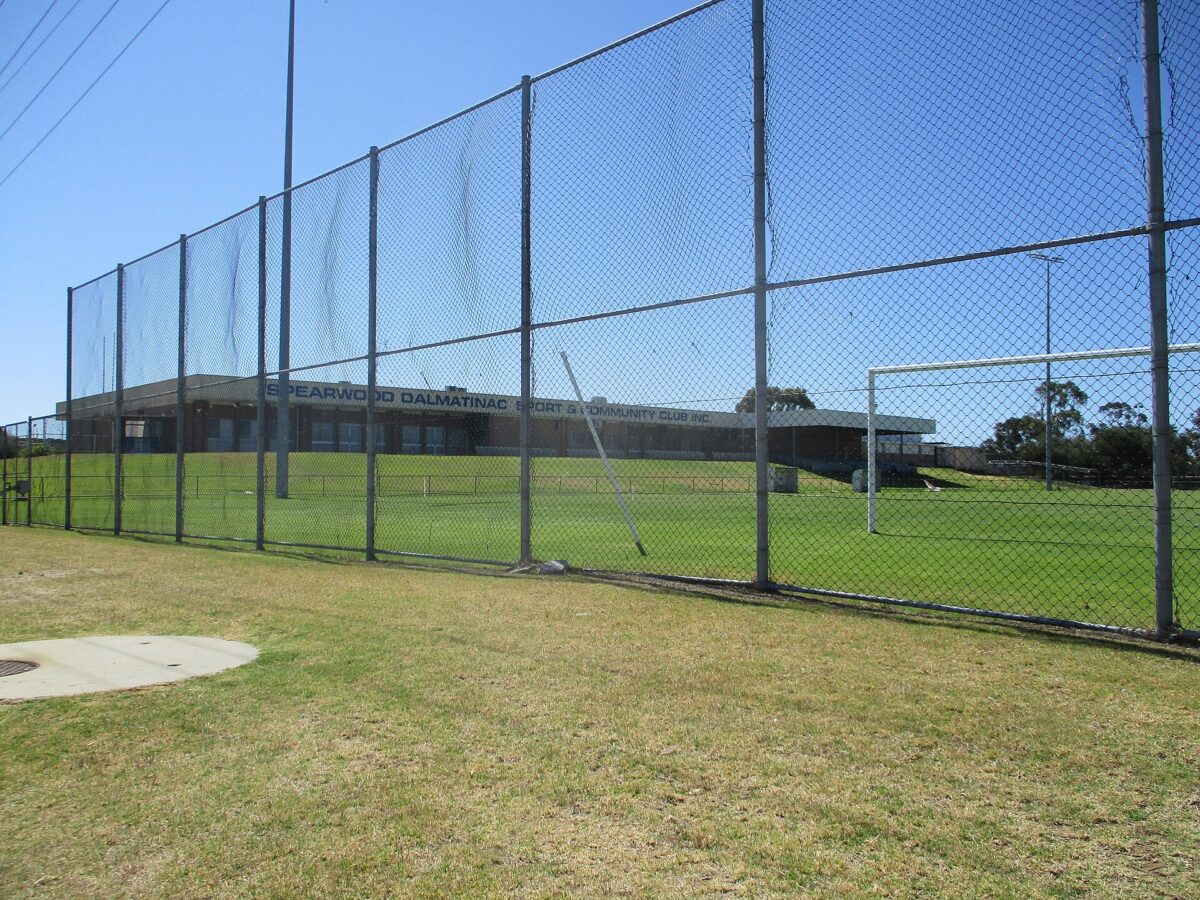
Spearwood is named after a native shrub and was settled by vegetable growers. Its swamps, its Croatian families and a bacon factory on Hamilton Road explain how a market garden district became the civic centre of Cockburn.
How Spearwood got its name
Landgate says the name comes from the spearwood bush, a shrub that was common in the area. It dates the first use of the name to 1897, when James Morrison subdivided his land as the Spearwood Gardens Estate. The City of Cockburn gives an earlier date: it says Morrison called the land The Spearwood Estate when he bought Cockburn Sound Location 264, near what is now Market Garden Swamp, in 1883, and that no record explains his choice.
Before the suburb
The City of Cockburn acknowledges the Nyungar people of Beeliar Boodjar, the country Spearwood stands on.
In the 1850s and 1860s the land was held in large pastoral leases by owners who spent little time there, among them Charles Manning, George Lourey Ellis and Edward Troode, who built a house called Woodlands on Hamilton Road. In the 1870s John Gilbride, a pensioner guard, took up 40 acres north of Lake Coogee for an orchard and vegetables. Morrison could not sell his estate whole, and when Robb Jetty became a stock landing place in the 1890s he promoted it as land for holding stock before slaughter.
How it grew
In January 1897 Morrison cut the estate into five acre lots and auctioned them as the Spearwood Gardens Estate at £25 a block. He sold 21 of the 38 lots on the day and the rest privately over the next year or two. Clearing was slow work, and in 1903 there were only 12 farms in the district.
The Fremantle to Jandakot railway was finished in 1906, and a Spearwood station is first mentioned in 1909. The Spearwood Progress Association formed in 1908, Spearwood State School opened in 1914, and a Church of England hall went up on Mell Road in 1916. Fertile soil and better roads to Fremantle made Spearwood the preferred place for market gardeners to lease land.
William Watson bought land at 174 Hamilton Road in 1909, including the Woodlands orchard, and made it the base of his pig farm, processing plants and factories. A larger killing floor opened there in 1931 and a butter factory on Mell Road in 1932, and the Watsonia name went on all the company’s products. Watson was also the first chairman of the Fremantle District Fruitgrowers and Market Gardeners Association in 1913.
After the First World War, returned soldiers and new migrants moved onto the land. Nicholas Marich, who served as a private in the war, bought land at Spearwood under the soldier settlement scheme and started a market garden, and the City records a sizeable Yugoslav population in Spearwood between the wars. Most of Cockburn’s Croatians came from Dalmatia, and Spearwood became one of Perth’s Croatian enclaves. During the Second World War many gardeners were exempted from military service to keep vegetables coming.
Houses arrived north of the railway in the late 1960s. In the 1970s the Shire of Cockburn moved its offices to new civic buildings in Spearwood. The Watsonia factories closed in 2009, and Eliza Ponds was built on the land from 2015.
Places that tell the story
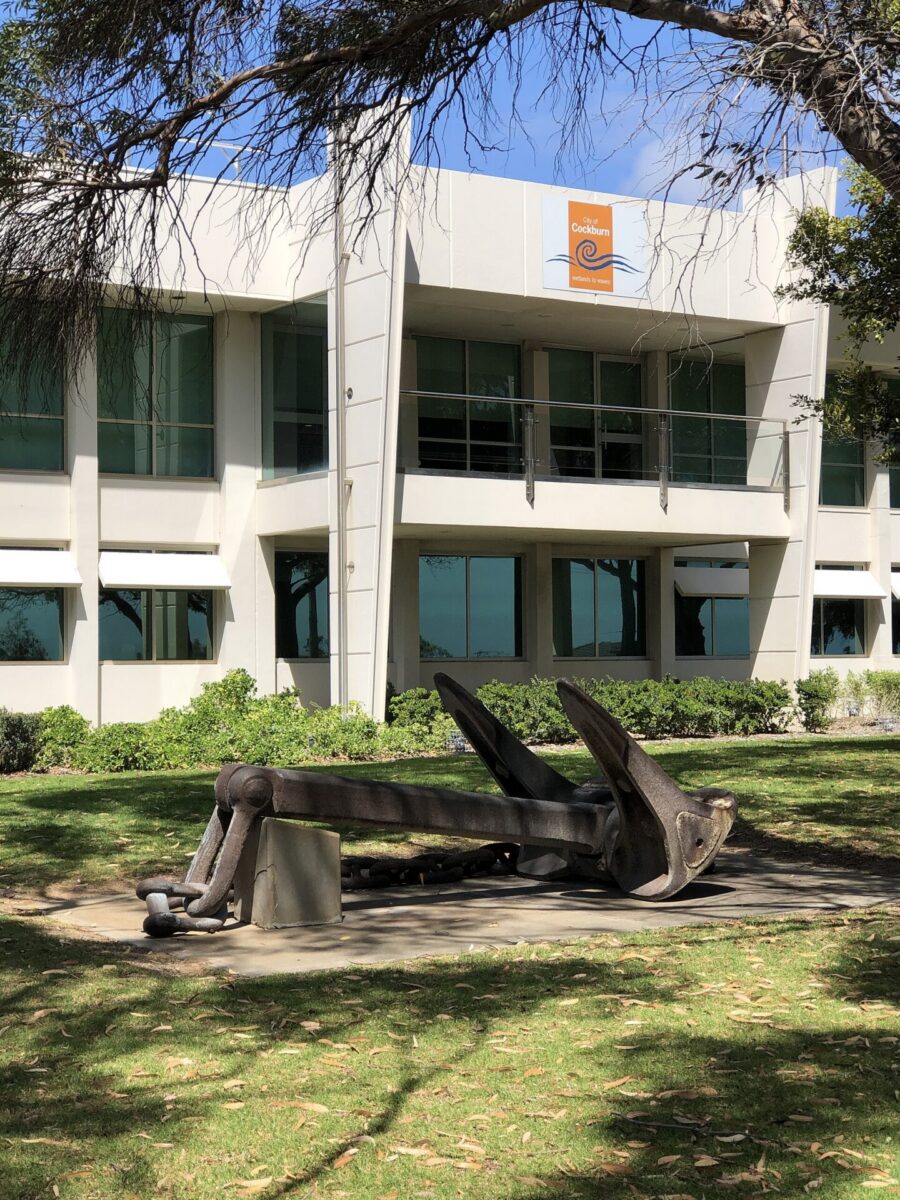
The City of Cockburn’s offices on Coleville Crescent stand on the site of the Spearwood Agricultural Hall. The growers’ association bought the land in 1921 and in 1927 rebuilt a surgical ward from Fremantle Hospital there as its hall, opened in March 1928 with the first Spearwood Show. It handed the land to the council in 1963 on condition it stay in public use, and the old Civic Hall is now the Seniors’ Centre.
Spearwood station stood where Rockingham Road crosses the railway at Goldsmith and Mell Roads. It was little more than a raised platform with one train each way a day, lost its passengers in the 1950s, and only a few posts remain. Just south of the crossing, Bailey’s store, which the Bailey family had run on Mell Road since 1924, reopened in December 1965 on Rockingham Road.
Spearwood today
The 2021 Census counted 10,944 people in Spearwood. The garden lots have almost all gone to housing, but Market Garden Swamp, the freight line and the civic centre on the old show ground still mark the places where the suburb began.
More about Spearwood
For what Spearwood is like to live in now, read our Spearwood suburb profile. If you own a property in Spearwood and are thinking about selling, start with buyers for your property.
Sources
- Landgate: Perth and surrounds suburb names (archived 2022)
- City of Cockburn History: Spearwood
- City of Cockburn History: Suburbs
- City of Cockburn History: Watsonia
- City of Cockburn History: Croatian politics in Spearwood, 1920-1945
- City of Cockburn History: Spearwood Agricultural Hall
- City of Cockburn History: Spearwood train station
- City of Cockburn History: Bailey’s store, Spearwood
- ABS 2021 Census QuickStats: Spearwood
Top image: Spearwood Dalmatinac Sport and Community Club, 2019. Photo: Calistemon, CC BY-SA 4.0, via Wikimedia Commons.
Dates and names are drawn from the sources above. Where sources differ, we have said so or given an approximate date.
By Key Performance Real Estate, 338 Beaufort Street, Perth
Category
Suburb Histories
Related Posts
Get an up-to-date, obligation-free market appraisal
Get our professional, obligation-free opinion of your property’s value, with advice on how and when to sell.