
Osborne Park fed Perth for decades. Its market gardens, its dairy farms and its early tramway shaped the suburb long before the showrooms and offices arrived.
How Osborne Park got its name
The suburb is named after William Osborne, a butcher who owned an abattoir and land along Wanneroo Road and was elected to the Perth Road Board in 1875.
Before the suburb
The suburb’s market gardens sat on the peaty swamps between Lake Monger and Herdsman Lake. inHerit records Lake Monger, Galup, as an Aboriginal camping, hunting and fishing ground before settlement.
How it grew
The area was part of a large crown grant to T. R. C. Walters in 1840, and Osborne bought part of the estate after Walters died in 1874. In the early 1900s Chinese market gardeners supplied the metropolitan area, followed by Italian gardeners. A tramway ran out to Osborne Park, and the line beyond Mount Hawthorn closed in 1948.
Most of the suburb’s houses date from the 1960s and 1970s, in its eastern part. The City of Stirling records that by the 1980s industry had become dominant in most of Osborne Park.
Places that tell the story
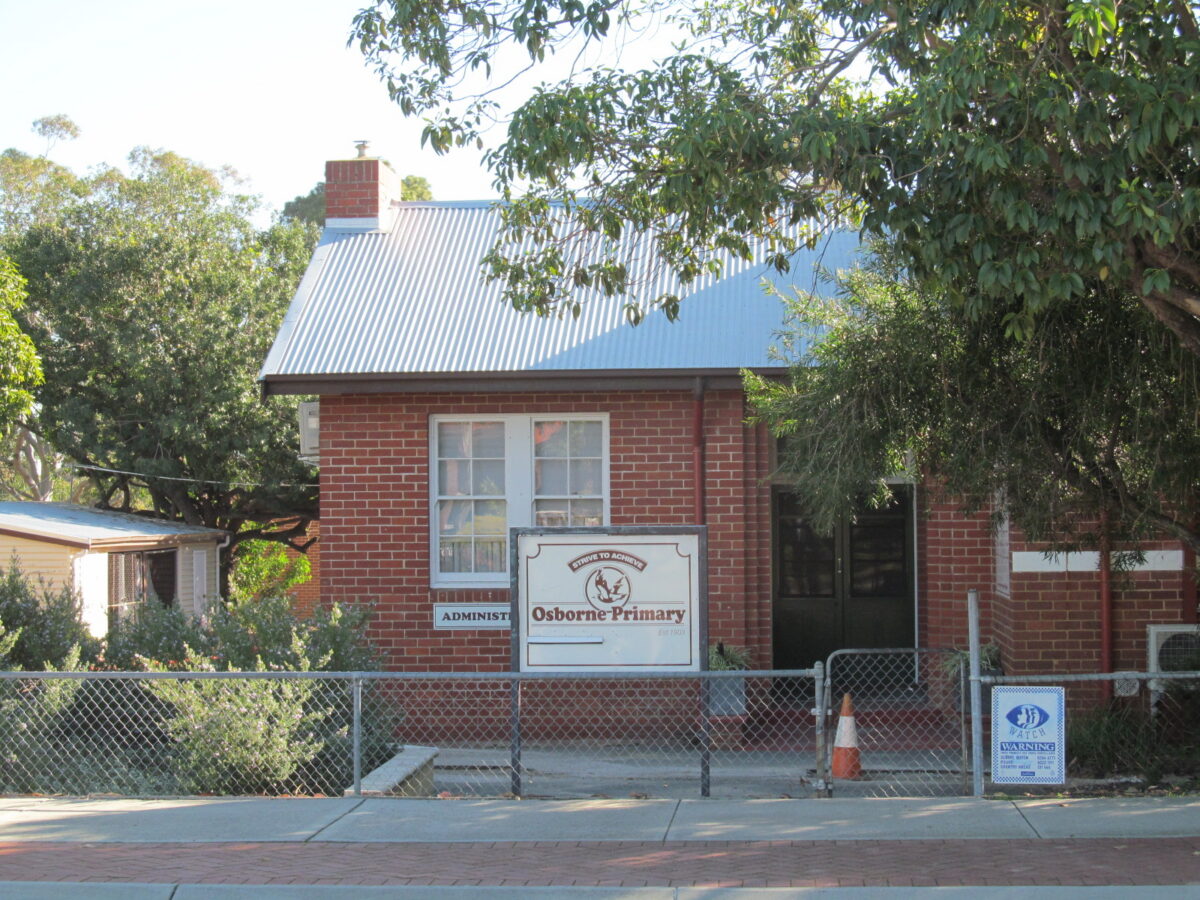
Osborne Primary School on Albert Street opened in 1903 for the children of market gardeners and dairy farmers. It is on the State Register.
Osborne Park Uniting Church on Edward Street is on the City of Stirling’s heritage list.
Osborne Park today
Osborne Park is now one of Perth’s main areas for showrooms, offices and light industry, with established houses in its eastern streets.
More about Osborne Park
For what Osborne Park is like to live in now, read our Osborne Park suburb profile. If you own a property in Osborne Park and are thinking about selling, start with buyers for your property.
Sources
- City of Stirling: Osborne Park
- inHerit: Lake Monger
- inHerit: Osborne Primary School
- Perth Electric Tramway Society
Dates and names are drawn from the sources above. Where sources differ, we have said so or given an approximate date.
By Key Performance Real Estate, 338 Beaufort Street, Perth
Category
Buying
Related Posts
Get an up to date obligation free market appraisal
One of our agents will visit your property to provide a professional, obligation-free market appraisal.