Maida Vale was first settled in 1873 and filled out from the 1890s with orchards, a quarry and small farms. A public meeting gave it its name in 1910, and its first post office and its lost hall and church show how the district was organised.
How Maida Vale got its name
Landgate records that the district name was chosen at a public meeting in 1910, taken from the name of settler W H McCormack’s property. It assumes the name came from Maida Vale in west London, which was itself named after Maida in Calabria, where the British defeated the French in 1806. Landgate names William Henry Mead as the first settler, in 1873, with a home in the Ridge Hill area and an orchard called Orangedale. The Kalamunda and Districts Historical Society lists William and Eleanor Mead, farmers from 1873, under Gooseberry Hill rather than Maida Vale.
Before the suburb
This is Whadjuk Noongar country. The City of Kalamunda’s history notes that the Whadjuk are the Noongar people of the Perth region, and that in 1827 Charles Fraser and James Stirling surveyed the area to judge whether it suited farming. The Kalamunda townsite was approved in 1902 and promoted as a health resort.
How it grew
The Kalamunda and Districts Historical Society lists the early settlers of Maida Vale. R. and W.H. McCormack, carriers and fruit growers, arrived in 1890. Thomas Statham, a quarry owner, and John Weaire, a farmer, followed in 1894, and Edward and Alic Myerson, a fruit grower and a lay preacher, in 1898.
The timber weatherboard house at 28 Priory Road, built from about 1906 and later known as The Priory, is recorded as the first Maida Vale Post Office. A hall and church named for Maida Vale were built on Kalamunda Road between 1912 and 1916 and stood until 1976.
Landgate notes that High Wycombe was part of Maida Vale until it was named as a separate suburb in 1978. Sixways, the junction where Kalamunda Road meets Gooseberry Hill Road, is now a local shopping centre. In September 2025 rural land in the south of the suburb was rezoned for urban use, opening the way for the next stage of housing.
Places that tell the story
The building at 28 Priory Road that was the first Maida Vale Post Office, a single-storey weatherboard house with a corrugated iron roof, has a place record on inHerit, the State’s heritage database. The site of the Maida Vale Hall and Church, demolished in 1976, is recorded there too, though inHerit places it on Kalamunda Road in Kalamunda. Maida Vale Reserve and its adjoining bushland are kept as a Bush Forever site.
Maida Vale today
The 2021 Census counted 4,499 people in Maida Vale. The suburb’s houses sit between the bushland reserves and the rural land in the south that is now set aside for future urban development.

More about Maida Vale
For what Maida Vale is like to live in now, read our Maida Vale suburb profile. If you own a property in Maida Vale and are thinking about selling, start with buyers for your property.
Sources
- Landgate: Perth and surrounds suburb names (archived 2022)
- City of Kalamunda: Heritage and history
- Kalamunda and Districts Historical Society: Kalamunda pioneers
- inHerit: First Maida Vale Post Office (fmr), The Priory
- inHerit: Maida Vale Hall and Church, site of
- City of Kalamunda: Activity Centres Strategy (2021)
- City of Kalamunda: Maida Vale South MRS Amendment
- City of Kalamunda: Bush Forever
- ABS 2021 Census QuickStats: Maida Vale
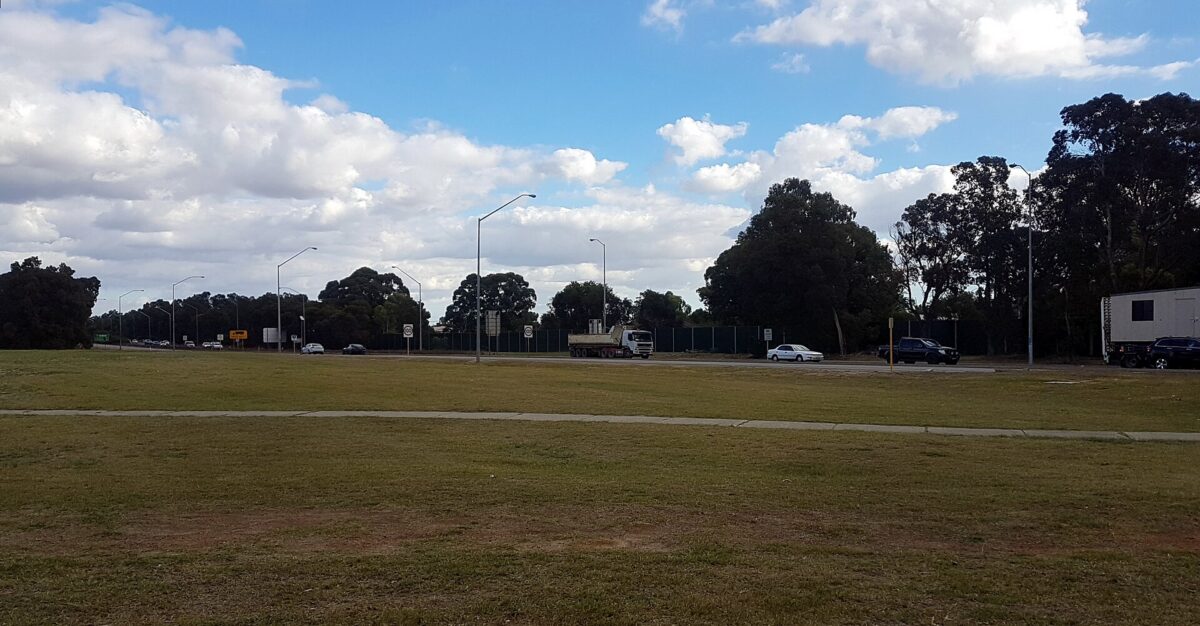
Top image: Roe Highway looking south from Kalamunda Road, Maida Vale, 2017. Photo: Orderinchaos, CC BY-SA 4.0, via Wikimedia Commons.
Dates and names are drawn from the sources above. Where sources differ, we have said so or given an approximate date.
By Key Performance Real Estate, 338 Beaufort Street, Perth
Category
Suburb Histories
Related Posts
Get an up-to-date, obligation-free market appraisal
Get our professional, obligation-free opinion of your property’s value, with advice on how and when to sell.