
Gwelup takes its name from a lake said to shift position. For most of a century its wet ground grew vegetables for Perth, until rezoning and the freeway turned it into a suburb.
How Gwelup got its name
Landgate records that the suburb is named after a small swampy lake in its south. Lands Department records of 1878 show it as Gwelup Swamp, and it was later recorded as a lake. Landgate traces the name to ‘Gwelgannow’, meaning to shift position or step aside, so the name probably means the lake that shifted position. The City of Stirling gives the same derivation.
The neighbouring name Karrinyup also comes from a wetland here. Careniup Swamp was first recorded in an 1844 survey, and the City’s thematic history says the Lake Karrinyup Country Club changed the spelling to Karrinyup in 1929.
Before the suburb
The City’s thematic history describes a Nyoongar coastal wetlands trail running from the Swan River along a chain of lakes that included Monger, Herdsman and Gwelup. The wetlands were places for camping, ceremonies, hunting and gathering.
In 1831 the land near the lake was granted to Thomas Mews. It changed hands several times, with William Osborne among the later owners, before Henry Bull of Sydney bought it in 1891. Bull subdivided Gwelup in 1898 and 1899, but few people came, and the fertile wet ground was used mostly for market gardens.
How it grew
Chinese market gardeners worked around Careniup Swamp from the late nineteenth century, and the thematic history names Ah Bong and Wong Ching among them. By 1925 the last of the Chinese gardeners around Careniup had been replaced by growers of European origin.
A state school opened at Lake Gwelup in 1914. In 1923 the Lake Gwelup and District Progress Association was formed, mostly by market gardeners, and raised money for a community hall. A convent school also opened at Gwelup.
Change came from planning decisions. The City’s local history collection records that the council began rezoning rural land for housing in 1961, which led many market gardeners to move north to Wanneroo. In 1967 about 100 acres were set aside for an interchange on a planned freeway, which the collection says opened through the area in 1982. From the 1970s Gwelup changed from a rural district into a residential suburb, and later estates such as Karrinyup Waters and Settlers Green filled in the remaining land.
Places that tell the story
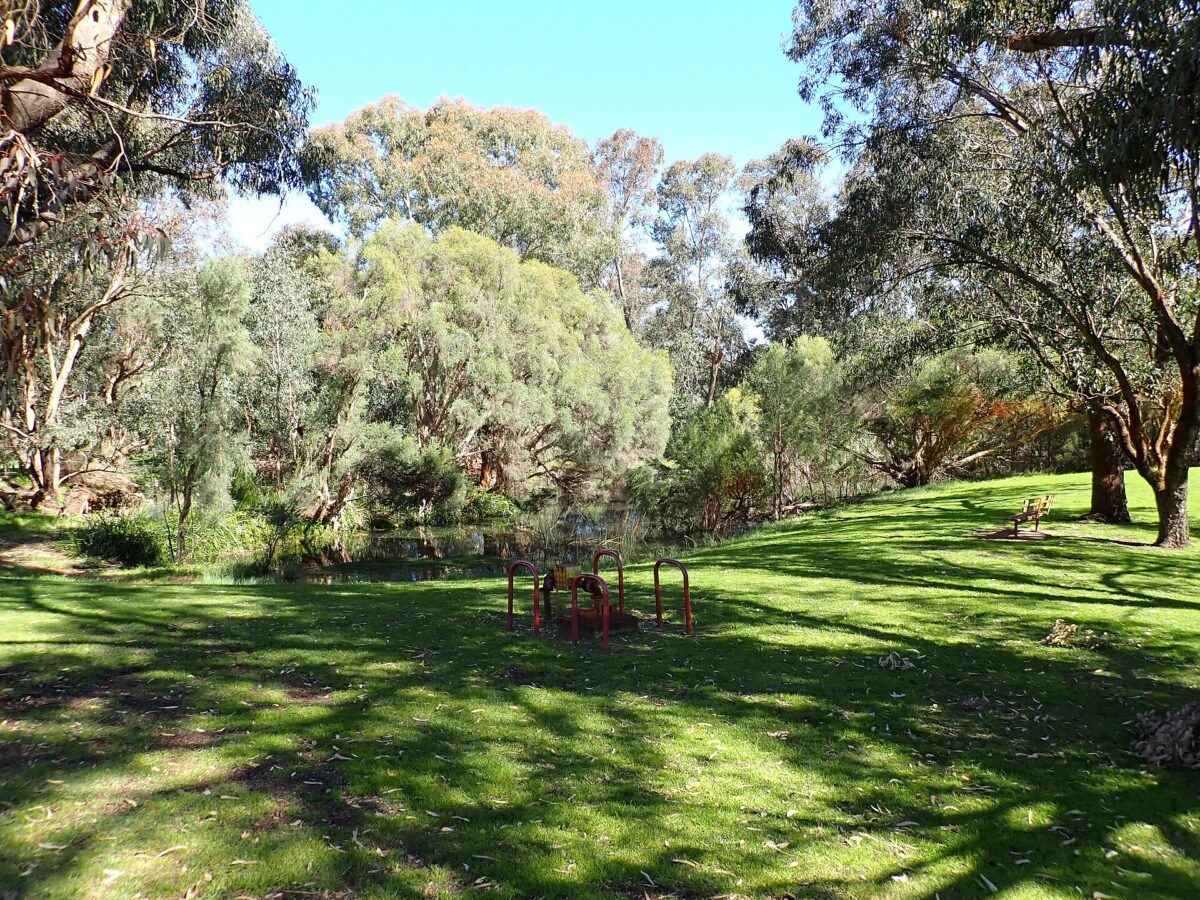
Lake Gwelup Reserve on Huntriss Road is on the City of Stirling’s heritage list and is graded Category B, a place of considerable cultural heritage significance, in the City’s municipal inventory. The volunteer group Friends of Lake Gwelup cares for its bushland.
Lake Gwelup Primary School on Porter Street carries on the 1914 school. It marked its 90th anniversary in 2004, buried a time capsule at a 1979 reunion held during the state’s 150th anniversary, and was rebuilt in 2012.
Along North Beach Road a few market gardens and older rural-style houses remain, the last signs of the farming district.
Gwelup today
The 2021 Census counted 5,391 people in Gwelup. The lake that gave the suburb its name is now a reserve in its south.
More about Gwelup
For what Gwelup is like to live in now, read our Gwelup suburb profile. If you own a property in Gwelup and are thinking about selling, start with buyers for your property.
Sources
- Landgate: Perth and surrounds suburb names (archived 2022)
- City of Stirling: Gwelup suburb profile
- City of Stirling Art and History Collection: Gwelup
- City of Stirling: Thematic History of the City of Stirling
- inHerit: Lake Gwelup Reserve
- Lake Gwelup Primary School
- ABS 2021 Census QuickStats: Gwelup
Top image: Lake Gwelup, 2023. Photo: Sam Wilson, CC BY-SA 4.0, via Wikimedia Commons.
Dates and names are drawn from the sources above. Where sources differ, we have said so or given an approximate date.
By Key Performance Real Estate, 338 Beaufort Street, Perth
Category
Suburb Histories
Related Posts
Get an up-to-date, obligation-free market appraisal
Get our professional, obligation-free opinion of your property’s value, with advice on how and when to sell.
