Cannington began as a timber landing on the Canning River. Its story runs from a homestead and a railway stop to a department store and the City of Canning’s administration centre.
How Cannington got its name
The City of Canning says the suburb takes its name from the Canning River. Landgate explains the ending: adding “ton” to a name was an old English way of marking a town.
Landgate says subdivision began in 1882, and that a railway station built in the early 1890s was given the name Cannington, which the surrounding area soon took up. The City of Canning gives 1897 as the year Cannington Station opened. The City also describes Cannington as its oldest suburb.
Before the suburb
This is Whadjuk Noongar country. The City of Canning gives the Whadjuk Noongar name for the Canning River as Djarlgarro Beelier, and records that the river was created by the Waugal, a serpent-like spirit ancestor.
The first settlers arrived in 1829 in the rush for land grants along the river. Early Cannington grew around Mason and Bird’s timber mill at Mason’s Landing, where timber went by barge to Perth and Fremantle. In 1866 a convict party built a fence of jarrah poles along the river to keep the channel navigable, and remnants can still be seen. Francis Bird, the architect, went into partnership with Mason in 1871.
How it grew
Albany Road, now Albany Highway, was the spine of the district. Arthur McIntosh set up a blacksmithing and coach building business there in 1893, the year the South-West railway came through, and Cannington Station opened in 1897. By 1900 the area had farms and orchards, a church known as the Church with the Chimney (1890), the Cecil Hotel (1896), Cannington School (1898) and the Canning Agricultural Hall (1898). The City names William Lacey Gibbs, Arthur McIntosh and the nurseryman George Wilson among the leading residents of the time.
Albany Road was rebuilt in 1931, and Charlie Grose’s Cannington Bus Service carried passengers to Victoria Park for sixpence. The Cecil Hotel lost its licence in 1927 and reopened as the Waverley Hotel in 1955. In 1958 Boans opened Boans Waverley beside it, the first suburban branch of the Perth department store.
Cannington Senior High School opened in the 1960s, and a new Cannington Primary School opened on Wharf Street in 1970. The old school on Albany Road was demolished for Carousel Shopping Centre, which opened in 1972. A new council administration centre opened on 2 May 1971 on land that had been the Wilson and Johns nursery, and the present Civic and Administration Centre at 1317 Albany Highway opened in 2006.
Places that tell the story
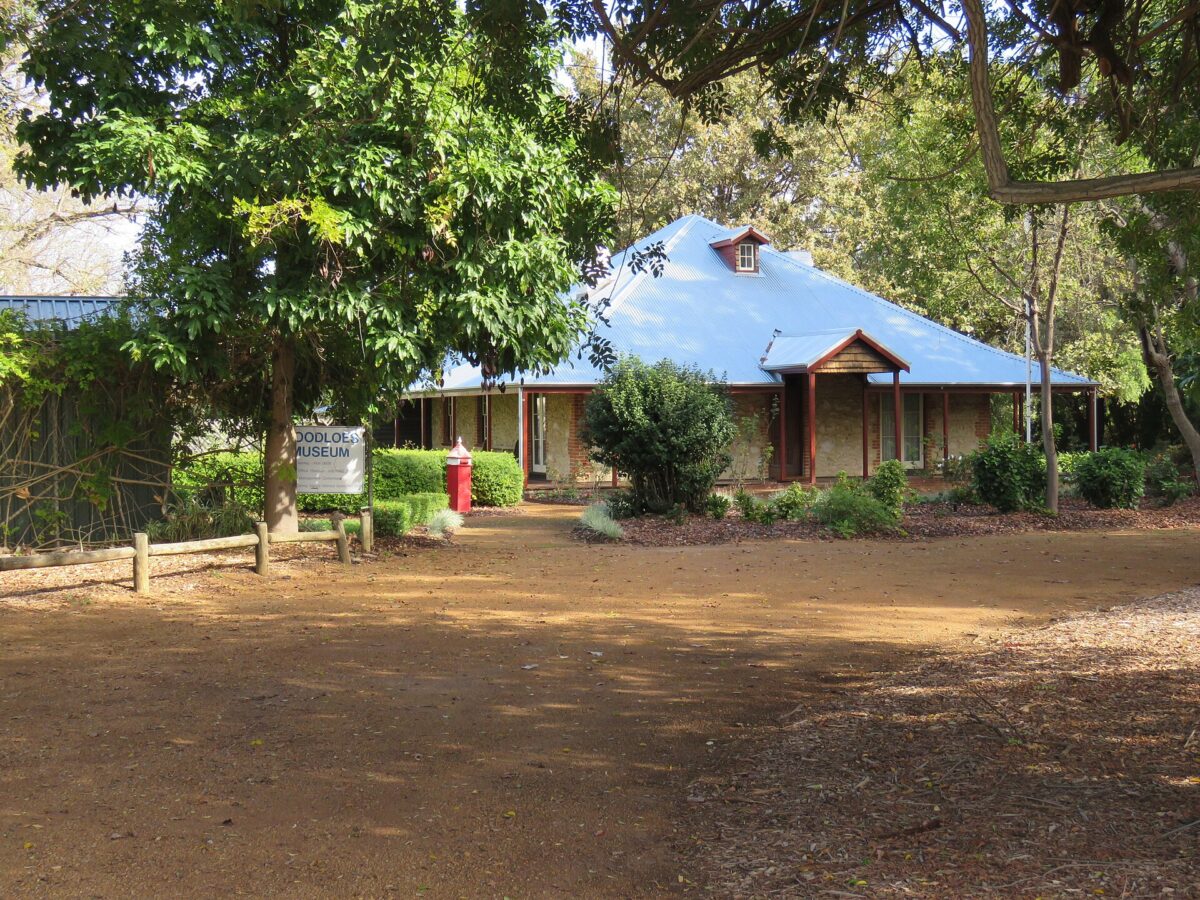
Woodloes Homestead at 39 Woodloes Street, a limestone house with a timber shingle roof designed by Francis Bird as his family home, is the oldest building in Canning. Joseph Shaw bought it in 1882, the Town of Canning bought it in 1974, and it was entered on the State Register of Heritage Places in 1997. It is now a museum run by the Canning Districts Historical Society.
Mason’s Landing and the remains of the convict-built river fence are also on the State Register. Westfield Carousel stands on the corner of Albany Highway and Cecil Avenue, where the Cecil Hotel, later the Waverley Hotel, and Boans once stood. Boans became a Myer store in 1985, and the Waverley Hotel was demolished in 1992.
Cannington today
The 2021 Census counted 6,875 people in Cannington. The City of Canning now treats the area around Carousel and the rebuilt station as its city centre, and the Wharf Street Basin and Cecil Avenue works are part of that plan.
More about Cannington
For what Cannington is like to live in now, read our Cannington suburb profile. If you own a property in Cannington and are thinking about selling, start with buyers for your property.
Sources
- Landgate: Perth and surrounds suburb names (archived 2022)
- City of Canning: Our Suburbs
- City of Canning: Historic Landmarks
- City of Canning: Aboriginal Culture and Heritage
- inHerit: Woodloes Homestead
- Sevenoaks Senior College: Our History
- ABS 2021 Census QuickStats: Cannington
Top image: Woodloes Homestead, Cannington, 2021. Photo: Calistemon, CC BY-SA 4.0, via Wikimedia Commons.
Dates and names are drawn from the sources above. Where sources differ, we have said so or given an approximate date.
By Key Performance Real Estate, 338 Beaufort Street, Perth
Category
Suburb Histories
Related Posts
Get an up-to-date, obligation-free market appraisal
Get our professional, obligation-free opinion of your property’s value, with advice on how and when to sell.